

The new year allows for a fresh start for families throughout the Ouachita and River Valley region after a year of financial uncertainties and inflation that kept many Arkansas families worried about the future. Now that the rush of the holiday season is over and tax season approaches, it’s time to evaluate the past year and consider some new year financial resolutions.
Review Your Current Financial Picture
When considering how to develop smart money habits in Arkansas, start by taking a close look at where you stand financially and how you performed over the past year. This includes your income, expenses, savings, debts, and recurring costs such as subscription services. Understanding where your money goes is the foundation for any financial resolution and building smart money habits in Arkansas.
Gather account statements from your bank, credit cards, and other financial institutions. Going through your accounts with a fine-tooth comb not only gives you an idea of how you spent your money. You can also look for any signs of fraud, such as purchases on a credit card that you may not have noticed earlier. If you find anything that looks suspicious it could be an expense that you’ve forgotten about, so take the time to figure out whether it’s legit. If you do find evidence of fraud, report it to your financial institution and law enforcement.
You should also use this as an opportunity to examine any recurring expenses, such as gym or club memberships and streaming services, how often you use them and how much you could save by cutting each one.
My Financial Health Suite can assist with its Online Subscriptions View. Access a consolidated view of your subscriptions to see where your dollars are going.
It’s also a good idea to categorize your spending and look for other ways to save. Things like restaurants, take-out meals, and food delivery may not seem like much of an expense at the time, but they can add up to a considerable amount over the year. Examining each spending category gives you a clear picture of where your money went over the past year. Fortunately, Union Bank offers online banking and mobile features to help you keep track of your expenses.
Build or Refresh Your Monthly Budget
If you’ve never created a budget, now is the time to do so. Of course, many people create a budget at the start of each year and soon forget about it as they focus on work, life, and other things. Try creating a realistic and sustainable monthly budget that’s tailored to your own lifestyle in the Ouachita and River Valley regions.
Many of our customers use what’s known as the 50/20/30 rule for household budgeting, where you split your after-tax income into three categories:
• 50% on needs such as housing (rent/mortgage), utilities, clothes, and groceries.
• 30% on wants. These are things you enjoy, but don’t necessarily need. This may include restaurant meals, travel, luxury food items, and expensive clothes or jewelry.
• 20% on savings and debt. This may include whatever you set aside for retirement, an emergency fund, an education fund, and loan payments on things such as credit cards and other debts.
Some people use a cash-based system for their monthly budgets and expenses, where they split their cash into different envelopes for each goal or category. Of course, with more people going cashless these days, many popular budgeting apps make it easy for you to keep track of your expenses. This method becomes even more useful when you sync your budgeting app with your Union Bank accounts through online banking and our mobile banking app.
Establish an Emergency Fund
One of your Ouachita savings goals should be to create an emergency fund or take a close look at the one you already have. Financial experts recommend that every household have three to six months’ worth of living expenses set aside as an emergency fund. This should be held in an account that you could readily access, while also earning interest (such as a designated savings account). Creating a separate savings account for your emergency fund makes it easier to keep track of and can reduce the temptation to use it for everyday expenses.

Consider how much your household would need if you faced a financial setback such as a job layoff or an unexpected expense, such as a major car or home repair or replacing an appliance. If you’re a sole breadwinner in your household and have a family to support, or if you might face a loss of income in the coming year, you might need more than six months of expenses in your emergency fund.
Reduce Debt Strategically
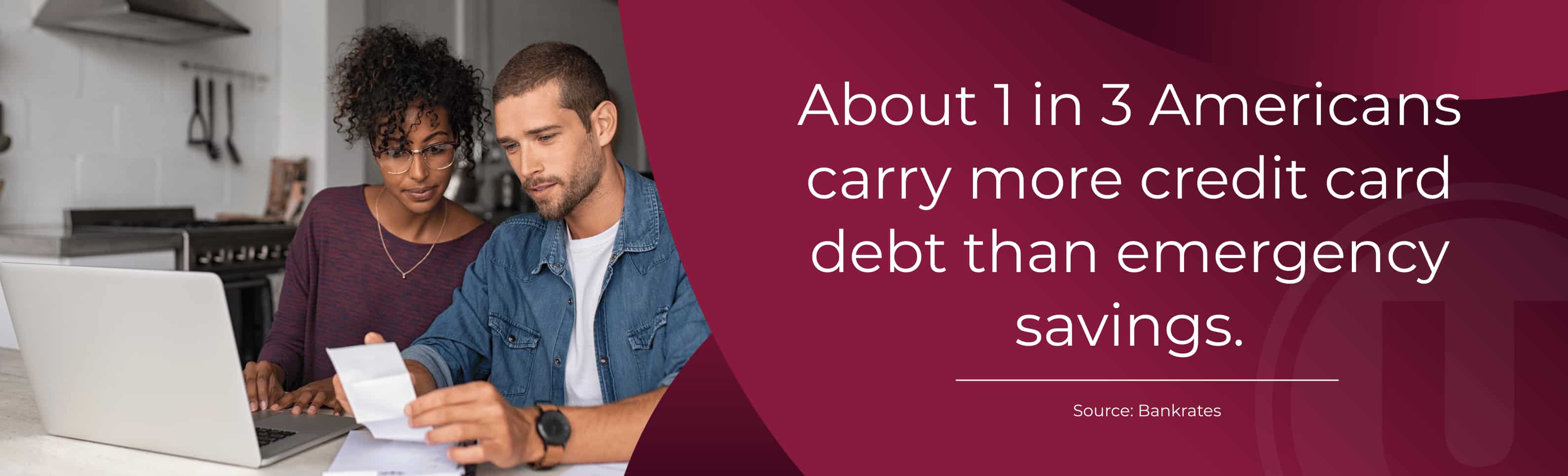
Make a list of all your outstanding debts, including any credit cards, if you can’t pay them off in full each month. Reducing your debts and their interest costs can improve your financial bottom line and your credit rating.
As you look for ways of reducing your debt load, keep in mind that the IRS allows income tax deductions for some types of loan interest, such as mortgage interest on primary and second homes. It also allows deductions on student loan interest.
An accountant or tax preparer could help you determine how much of those interest costs you could deduct, and this is something to consider when figuring out which debts to focus on paying off first. If you own your own business, you might be able to deduct the interest you pay on business loans and your business credit cards.
Avalanche vs Snowball
There are two common methods that people use to get out of debt, known as the snowball and avalanche methods. With the snowball approach, you focus on paying off your smallest debts first. As you pay off each debt, you move on to the larger ones. They call this the snowball method because your debt reduction is like a snowball growing in size as it rolls downhill.
With the avalanche method, you prioritize paying off your debts that carry the highest interest rates. The idea behind this is to reduce your interest costs as fast as possible, which reduces your borrowing costs and frees up funds you can then use to pay off your lower-interest debts.
Consider Refinancing Your Debts
If you own your own home and have debts with high interest costs, such as credit cards or personal loans, you might be able to consolidate and refinance these debts at a lower interest rate through a home equity line of credit (HELOC) or a home equity loan.
Improve Your Credit Score This Year
Part of your financial resolutions for the new year should be to check and keep an eye on your credit score as this has a direct impact on your financial well-being, such as your ability to obtain a loan and the interest rate you’ll have to pay. You can get a free credit report every week from AnnualCreditReport.com. You’ll receive three reports from the nation’s three credit reporting bureaus: Equifax, Experian, and TransUnion.
Take a close look at your credit history for any accounts or debts you don’t recognize, as it could be a sign of fraud. If you do spot any inaccuracies, you can contact whichever bureau lists that information in its report.
The three biggest factors that determine your credit score are:
• Your payment history (whether you pay your bills on time): 35%.
• Your credit utilization (how much credit you have versus how much you’re actually borrowing): 30%.
• Length of credit history, which means how long you’ve had each account (the longer the better): 15%.
Paying your bills on time and reducing your debts can go a long way to improving your credit score. If you have any old accounts, such as a credit card, that you don’t use very much, consider holding onto it and keeping it active. This not only improves your length of credit history, but it also helps with the amount of available credit you have and your credit utilization. At the same time, applying for new credit can negatively impact your credit score.
Set Clear Savings Goals for 2026
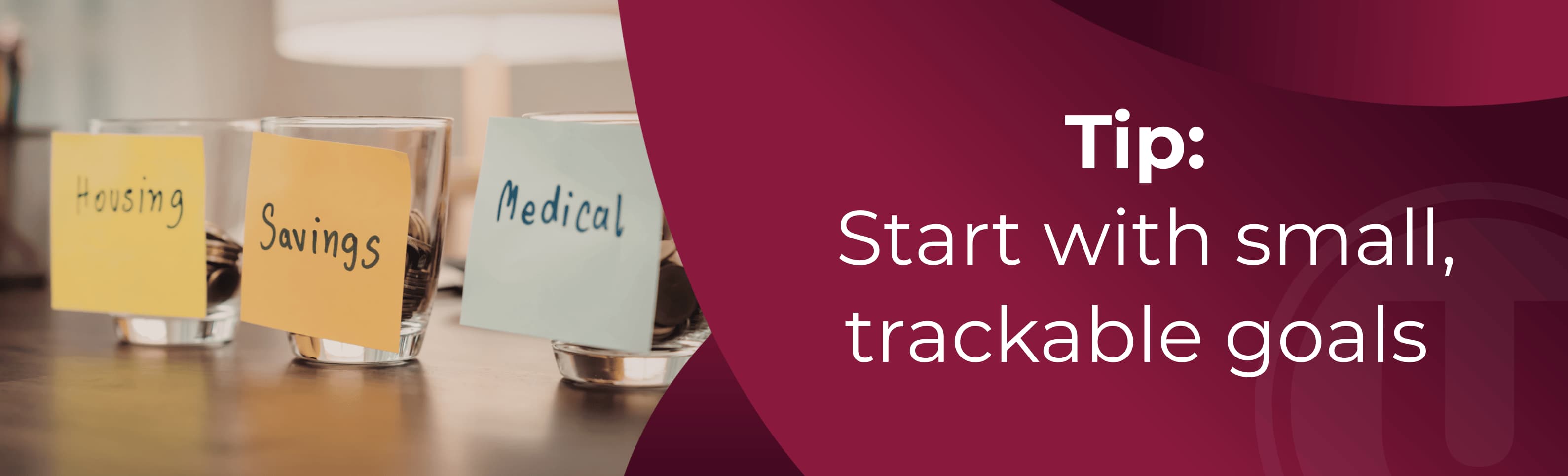
Consider any financial goals you’d like to achieve in the coming year. You might want to save up for home improvements, a new vehicle, a vacation, holiday spending, or an education fund. Setting up individual “buckets” for each goal can help you keep track of each target and how you’re doing. You might account for each fund through a budgeting app or by setting up different savings accounts.
As you plan goals like saving more, increasing emergency funds, or tackling debt in the year ahead, consider strategies for pairing up with the person you share life (and finances) with. For couples looking to build shared financial goals and simplify money management together, check out our guide “Love Your Finances: A Couple’s Guide to Joint Accounts and Budgeting” for tips on joint accounts, shared budgeting, and communication strategies.
Starting the year strong often begins with getting your financial life organized. If you’re looking for a fresh way to get your finances in order, explore our guide Spring Cleaning: 10 Steps to Organize and Simplify Your Finances for practical steps to declutter accounts, streamline budgeting, and build better financial habits.
Explore New Financial Tools with Union Bank
Many of our customers discover that they tend to set more aside each year by automating their savings. They have their income deposited into a checking account, with automatic transfers into one or more savings accounts that happen regularly, such as with every paycheck or once per month.
Of course we offer many other ways to save, other than a regular savings account. Many of our customers use a money market account to earn more interest on their savings, or certificates of deposit (CDs) where you set aside part of your savings at fixed terms, from 31 days to five years. Since CDs with the longest terms earn more interest than shorter-term CDs, you might opt for what’s known as a CD ladder, where you keep some of your savings in CDs of different lengths. This way, every time a CD comes to term, you could either access the funds or reinvest them in another CD.
We also offer online and mobile banking tools to make it easy for you to manage your funds, make transfers between accounts, and keep track of how you’re doing.
Protect Yourself with Better Security Habits
While technology makes it easy for people to manage their funds, cybercriminals are always on the prowl, looking for ways to pilfer your accounts. That’s why our Union Bank financial tips include a vigilant approach to keeping your accounts secure. This requires using strong passwords for not only your bank accounts, but also your email and any other online accounts.
Any password that’s easy for you to remember and convenient for you to type could also make it easy for hackers to gain entry. Even a really good password can lose its effectiveness if you use it for more than one account.
Consider using a password manager that can create complicated passwords and store them in a vault. This way, you would only have to remember one password and your password manager would do the rest. Multifactor authentication can also keep your accounts secure, where you would have to approve every logon through an app on your phone or by receiving a code via text.
Make sure that any time you access your financial accounts or enter a password, you do so using a cellular network or a secure Wi-Fi. Free Wi-Fi at a coffee shop might be convenient, but it can also make it easy for hackers to steal your data and log on information.
We also recommend setting up financial monitoring through our Union Bank mobile banking app. You can customize the kinds of alerts to receive to help you guard against suspicious activities.
Plan for Long-Term Growth
Of course, financial planning for 2026 is about much more than just getting through the year. Take the time to go over your long-term plans for retirement, college savings, and any future investments you’d like to make, such a saving up for a down payment on a home.

We also recommend meeting with a financial professional early in the new year to go over your plans and discuss how to meet your goals. Taking the time to plan accordingly can greatly reduce your chances of financial stress later on.
We’re Here to Help You Succeed
Reviewing your finances, budgeting responsibly, saving what you can, reducing your debts, improving your credit, and planning for the future are all crucial to long-term financial success. Remember that even small, simple but consistent actions can lead to real progress through the year. Please contact Union Bank or visit one of our branches in the Ouachita or River Valley region to start the year with financial confidence.