

Buying vs. Renting Land: What’s the Best Decision for my Farm?
As a farmer, your land is your most valuable asset. Both in the Arkansas River Valley and the Ouachitas, rising land prices and increasingly competitive rental agreements have made access to the land more challenging year after year. Whether you’re running a cattle operation or row crop farming, the decision whether to buy or rent your farmland impacts all aspects of your farm’s business—its profitability, long-term security, and your own flexibility when it comes to business matters. By understanding the financial impacts of each as well as the local market, you can make the right decision for your farming operation.
Farmland in Arkansas
Compared to other states—and the national average—Arkansas is a more affordable place to farm and invest in the land. Here are some key figures from the Arkansas Farm Bureau:
- Average cash rent for cropland in Arkansas (2024): $126/acre
- Average pasture rent: $21.50/acre
- Average value per acre of cropland: $3,600
- Average value per acre of pasture: $3,270

Let’s examine both the short- and long-term costs associated with both renting and buying. While the cost breakdown is necessary to make a decision, factors like equity, flexibility, and potential business growth all need to be considered when choosing your financial path.
The Cost of Renting vs. Buying Land
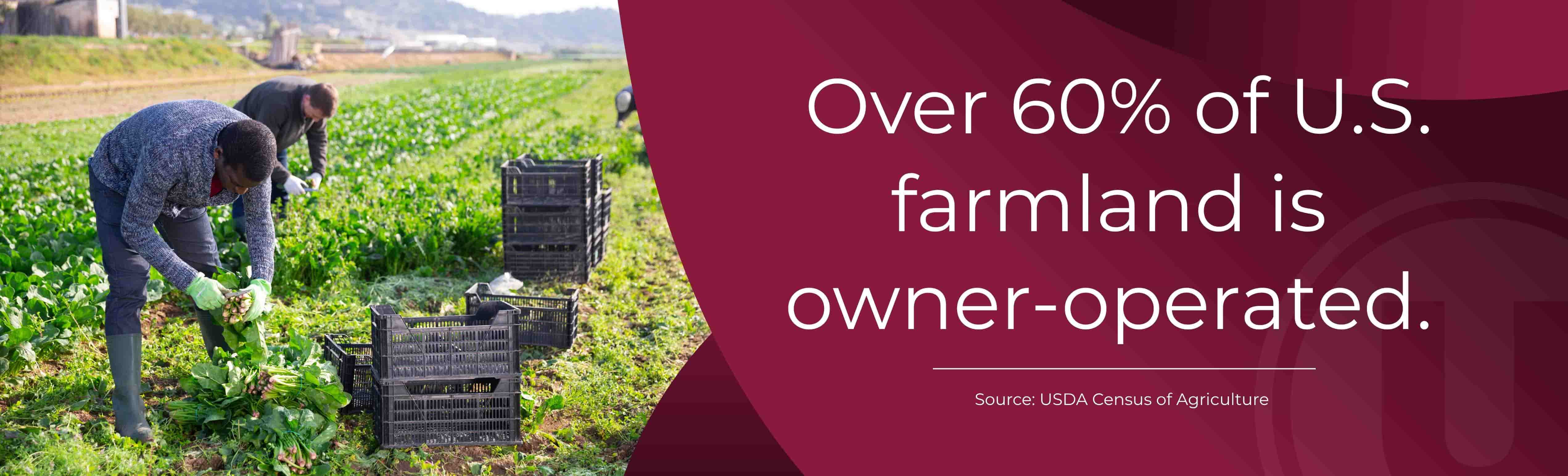
If it were as simple as which option costs less upfront, this would be an easy decision. Wise investors think not only about short-term costs but the long-term benefits of their investment decisions.
Renting: Flexibility, Lower Upfront Cost
Let’s say you lease 100 acres of cropland at $126/acre. Bear in mind that cash rent rates for farming are typically calculated on an annual basis, meaning the $126/acre is for the year, not per month.
- Annual cost: $12,600
- Over 10 years: $126,000
- Over 20 years: $252,000
- Equity built: $0
An obvious upside to renting is that it requires little to no upfront cost. If you’re just beginning a farming journey or are looking to expand but struggling with liquid assets, then renting might be your only option to access more land. Rental payments are also tax-deductible, which saves you even more money. The downside is that you don’t build equity, meaning all that money you’re putting into your farm doesn’t build long-term wealth or lead to land ownership.
Buying: Higher Cost, Higher Equity
Now consider buying that same 100 acres at $3,600/acre. There are different ways to finance landownership, including USDA-backed Farm Service Agency (FSA) loans. A typical FSA loan was used for the calculations below, though they can vary based on your specific situation.
- Purchase price: $360,000
- Down payment: $72,000
- Financed amount: $288,000
- Loan term: 20 years @ 5.75% APR
- Annual loan payment: $16,560
- Total paid over 20 years: ~$331,200
- Equity after 20 years: 100% ownership of the land (plus potential appreciation)
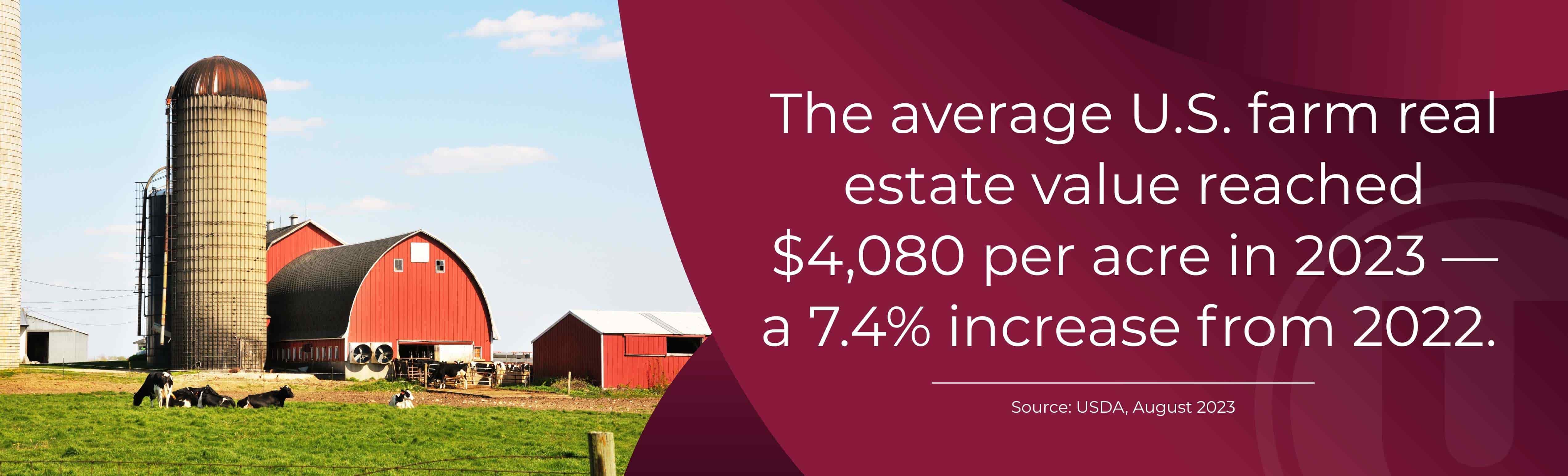
Buying requires a larger upfront investment, but it pays off on the back end with equity and an appreciating asset. Many beginning farm owners see the down payment as an impediment to buying, but many banks offer programs to new farm owners that can help with this. A Union Bank representative can answer specific loan questions.
Tax Considerations
There are a number of tax considerations that play into the decision to rent or buy. Let’s look at a few below.
When Renting
- Lease payments are fully tax deductible. This will save you a bunch of money annually and lets you reinvest in your farm or begin to save for a down payment.
- You avoid paying property taxes, insurance, or loan interest. These financial obligations belong to the landowner charging rent, although these costs may be factored into your cash rent, depending on the exact rental situation.
When Buying
- Tax deductions. You can take advantage of many tax deductions as a buyer. These include, but aren’t limited to, loan interest, property taxes, and equipment depreciation.
- You build equity over time. This not only increases your farm’s net worth—it improves your borrowing power for future expansion and upgrades.
Additionally, these deductions can lead to substantial savings, especially since both land and rent prices will increase with inflation.
More Benefits of Owning Land
While equity may be a major financial benefit to owning land, there are other reasons to consider the investment.
- Collateral. When you own land, you can leverage it to secure loans for things such as equipment, livestock, and improvements.
- Control. Since you are the owner, you have the power to decide what to do with the land. Rotating crops, making improvements, and deciding how to use the land are now decisions you can make unilaterally.
- Stability. A fixed rate loan is not susceptible to sudden increases like rent is.
- Legacy. Your farm can become your children’s farm, or you are able to sell when and if you need to.
What Are Farmland Loans?
When procuring a loan, Arkansas farmers have several options available to them. Many beginner farmers choose to borrow through the USDA, while others select more traditional agricultural loans.
USDA Farm Ownership Loans
USDA loans are available through the FSA and offer the following:
- Low-interest financing up to $600,000 and flexible repayment terms
- A downpayment program to help with the initial cash investment
- Joint financing with other lenders
The FSA offers Direct loans and also Guaranteed loans through commercial lenders.
Conventional Ag Loans
Union Bank offers agricultural lending designed to meet a variety of needs for farmers in Arkansas. Whether you’re looking to expand your farmland, refinance, make improvements, or invest in equipment, our team understands the needs of local farmers.
What Makes the Most Sense for My Farm?
Leaning towards buying? Here are some questions to ask yourself.
- Do I have enough capital for a down payment? If not, will I be able to access credit?
- Do I plan on keeping the farm in the same location for at least 10 years?
- Am I looking to expand my ability to access credit?
- Are land prices in my area rising? Would buying now lead to increased equity and land value?
- Is it important to have something to pass down to the next generation?
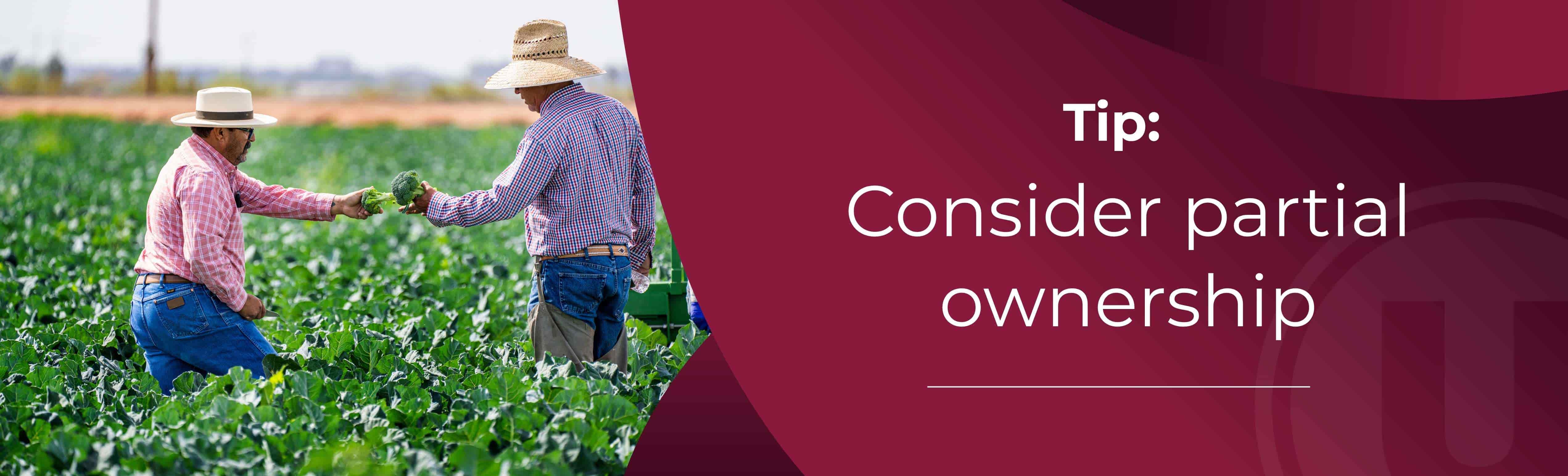
If you're unsure, many farmers begin by leasing land and then transition into ownership as their operations grow and become profitable. Other farmers own certain parcels of land while leasing others, giving them a mix of flexibility and equity-building. Every farming operation is unique. Speak with a trusted lender who is familiar with local market trends and conditions for more personalized insight.
In Arkansas, land values are still competitive. This means younger and first-generation farmers can become landowners with smart planning and finances. At Union Bank, we’ve been working with farmers in West Central Arkansas for several generations. Our lending team is ready to help you explore financing options tailored to your farm’s goals. Contact us or stop by one of our many branches today!